Date: 13 Jul, 2026
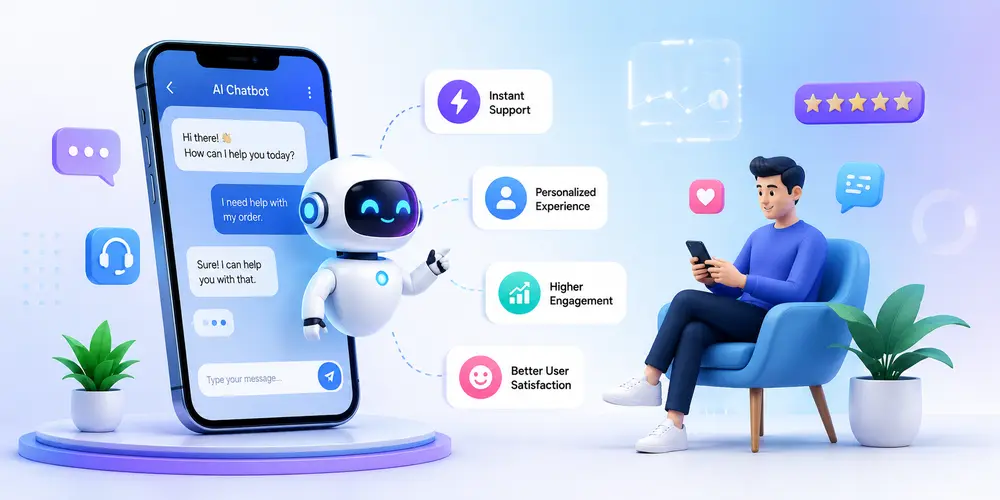
The whole thing about a mobile app working, it comes down to one plain question, how it serves the person who is using it. In a world where folks toss an app within seconds if it feels off or slow, companies keep looking for that sweet spot where interactions become faster, smarter, and more personal too. And yea, this is where AI chatbots moved in, they aren’t really a “nice-to-have” thing anymore, it’s more like the backbone of modern mobile UX design, whether people admit it or not.
Right now, many top App Developers in India are adding conversational AI across all sorts of industries, like e-commerce, healthcare, banking, travel, you name it. The idea is simple: users should get instant answers, recommendations that actually match what they want, and navigation that doesn’t feel like a maze. On top of the chatbot part, businesses are also joining with strong Digital Marketing Services, so this better experience doesn’t stay hidden, it shows up in front of the right audience and turns into real engagement and revenue. In this piece, we’ll talk about how AI chatbots are reshaping mobile app experiences, what kind of problems businesses can hit when they implement them, and where the tech is going next.
Chatbots used to be stuck in this clunky stage, rule-based scripts that could only respond if a user typed a very specific keyword or two. Now, modern AI chatbots run on Natural Language Processing (NLP) and Machine Learning (ML). So instead of being rigid, they pick up patterns, understand context, and essentially get better after each conversation. Because of this shift, a Mobile App Development Company in India can build chatbots that don’t just read through FAQs and spit out answers. They can figure out user intent, notice sentiment, and guide people through bigger in-app journeys, while still sounding natural and, well.
1. Instant and 24/7 Customer Support: Users do not like waiting. And honestly, one of the fastest ways to lose someone is slow response time, even for a second. AI chatbots fix this by giving customer service without any need for human involvement. Like in a banking app, a chatbot can immediately answer questions about balance, transactions or even loan-related status—so it saves time and takes some weight off customer service teams, it feels smoother.
2. Customized user experiences: Modern chatbots sort of “learn” from a user behavior, meaning clicks, purchases, and searches. Then they use that context to offer personalized suggestions. For example, an eCommerce app chatbot can recommend items based on prior orders, so the whole shopping vibe feels more directed, less generic.
3. Smooth onboarding and navigation: First impressions, they really matter. A lot of users quit an app because they are unsure how it should be used. Whether you are onboarding a new person to build a fitness routine, or helping a banker navigate a feature, AI chatbots can act like a friendly companion, guiding them step by step, bit by bit.
4. Boosting engagement and retention: Keeping users is harder than getting them to download. Chatbots help with smart reminders, tailored nudges, and little interactive check-ins, so users stay active and are more likely to come back inside the app longer.
5. Automating repetitive tasks: Chatbots take care of the repeated stuff, appointment bookings, order tracking, order processing, and refunds. For instance, a travel app chatbot can search, compare, book, and confirm flights without human action, it just does it.
6. Going global with multilingual support: Language is a real obstacle for apps that want to scale. Multilingual AI chatbots let businesses support users in their preferred language, so trust goes up and barriers drop across different regions.
7. Voice-Activated, Conversational Experiences: Since voice assistants are becoming normal, chatbots are evolving into hands-free, voice-first interactions. This really helps in apps like food delivery or navigation, because typing is often not convenient
And yeah, this kind of forward-looking capability is exactly what a reputable Mobile App Development Agency in Delhi tends to build, not just apps that “work”, but apps that feel intuitive and ahead of the curve.
Even with all the benefits, adding AI chatbots has its own set of hurdles
Partnering with an experienced Mobile App Development Solutions Company helps businesses handle these challenges properly, from picking the right AI framework to designing chatbot flows that actually feel conversational, instead of mechanical
Chatbot tech keeps leveling up. Here’s what seems to be coming:
Businesses that jump on these shifts early will get a real advantage, against competitors who are still stuck on old-school support systems. That’s also why a lot of companies bundle their AI integration work with a trusted Best Web Development Company in India, so their web and mobile touchpoints stay consistent, quick, and dependable across every platform.
AI chatbots powered by AI have moved from a “try it later” extra, into a core mobile app strategy piece. They provide instant help, make the user journey feel more personal, take over repeat tasks, and let apps grow across languages and regions—while also keeping people active and engaged for longer. If you’re planning to build, or even just upgrade, a mobile app with chatbot intelligence, choosing the right technology partner really does change everything. scmsurgetech.com focuses on creating smart, user-first mobile applications that mix AI progress with clean UI and dependable performance so brands can turn everyday app interactions into longer-term customer relationships
Frequently Asked Questions (FAQs)
1. What are AI chatbots, and how do they work in mobile apps?
AI chatbots use Natural Language Processing together with Machine Learning to understand what people ask, and then return responses in real time. In mobile apps, they’re often placed inside the support flow, or sometimes near navigation, so users don’t have to hunt around much
.
2. Do AI chatbots replace human customer support entirely?
No, not fully. Most teams run a hybrid setup, chatbots handle common questions, and human agents step in for the complex, sensitive, or weird edge-case stuff
3. Are AI chatbots expensive to integrate into a mobile app?
It depends on how detailed you want it, what features you’re targeting, and which AI model you select. A basic FAQ-style bot is often cheaper, but more advanced, personalized chatbots typically need added development time and extra training work
4. How do chatbots improve user retention in mobile apps?
They boost retention by sending timely nudges, offering relevant next steps, and answering faster when users hit a snag, so the likelihood of someone giving up drops
5. Is user data safe when using AI chatbots?
Reputable developers typically follow strong data protection rules like GDPR, and they use encryption to safeguard conversations. Still, it’s wise to choose a development partner that treats data security like a priority, not an afterthought
6. Can AI chatbots support multiple languages?
Yes. Many modern chatbots can be trained to understand and respond in multiple languages, so they work well for apps serving international audiences or multilingual users
7. What industries benefit the most from AI chatbots in mobile apps?
E-commerce, banking, healthcare, travel, and food delivery are some of the biggest winners, because chatbot integration often brings clear UX improvements. But honestly, almost any app that includes support can benefit from this kind of setup

22 Oct, 2026
19 Oct, 2026

14 Oct, 2026
14 Oct, 2026

07 Oct, 2026

05 Oct, 2026
29 Sep, 2026

25 Sep, 2026



 Website Design
 Web Development
 Graphic Design
 Digital Marketing
 Mobile App Development