Date: 22 Oct, 2026
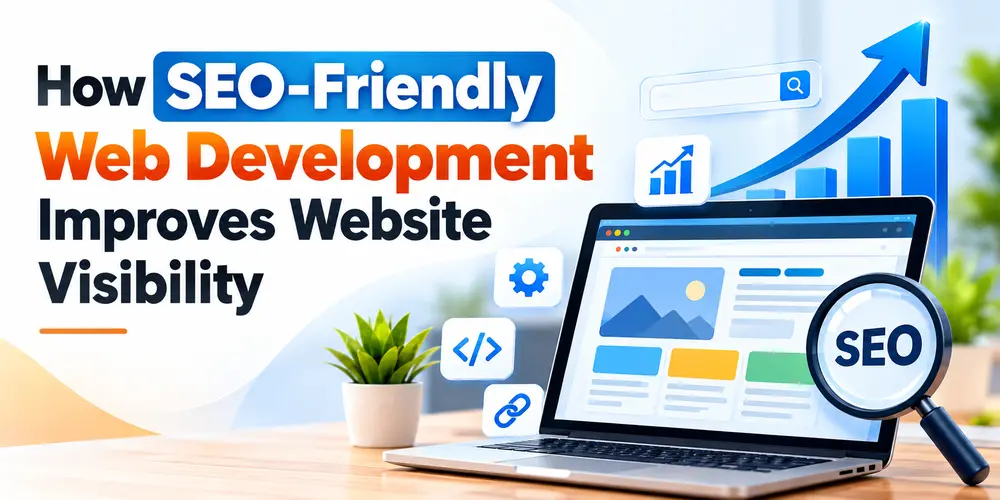
Building a website is no longer just about looking good. Honestly, if people can’t find your site on Google, even the prettiest design really won’t bring customers. so, nowadays most businesses work with a trusted Web Development Company in Delhi and they try to bake SEO into the code, the structure, and the performance from day one. Whether you’re after a custom platform with a Laravel Company in Delhi, or you just need a straightforward business site, SEO-friendly development gives your brand that basic footing to rank better, reach the right crowd, and turn random visitors into real customers. In this post, we’ll talk about how SEO-friendly web development works, and why it ends up being one of the smartest bets for long term online growth.
SEO-friendly web development basically means: you design and code a website so search engines can crawl it, understand it, and index it with less hassle. Instead of treating SEO like a last-minute fix, developers think about it during every step: site architecture, page speed, mobile responsiveness, clean code, and how the content is organized. A lot of businesses build first then “repair” SEO later which can be expensive and honestly quite time consuming. Building the right way from the start saves money, and gives you a head start over competitors.
1. Faster Page Speed
Page speed is a Google ranking factor, and users are impatient (they really just bounce). If your site takes more than three seconds to load, many people just leave. SEO-friendly developers speed things up by compressing images, minifying CSS and JavaScript, using browser caching, picking dependable hosting, and cutting down on unnecessary plugins and scripts. A faster website generally means lower bounce rates, more time on site, and better signals for search engines.
2. Mobile-First Responsiveness
Google works with mobile-first indexing, so it checks the mobile site first most of the time. A responsive design basically shifts nicely across screen sizes, meaning users get a smoother experience on phones, tablets, and desktops too. A professional Website Design Company in India will usually ensure buttons are tap-able, text stays readable, and navigation doesn’t go all weird on smaller screens, which ends up supporting stronger rankings as well.
3. Clean, Crawlable Code
Search bots read your code before they “get” your content. messy or bloated code makes crawling difficult, and it can also mess with indexing. SEO-friendly developers rely on semantic HTML, correct heading tags (H1 to H6), structured data like schema markup, and clean URLs. That way search engines can interpret each page the right way.
4. Logical Site Structure and Navigation
When your site is organized properly it helps real people, and it also helps search engines. A clear hierarchy like homepage → categories, and categories → specific pages make it simpler for bots to find everything. Internal linking also spreads authority across pages, and keeps visitors around longer, which is kind of a win-win. XML sitemaps, plus a robots.txt file that’s configured right, further guide search engines toward your most important pages.
5. Optimized Meta Tags and URLs
Title tags, meta descriptions, image alt text, plus URL slugs all influence how your pages show up in search results. SEO-friendly development builds these pieces into the CMS so each page can be updated without much hassle. Descriptive, keyword-aware URLs often improve click-through rates, because people can guess what they’ll get before they even open the link.
Search engines actually judge user experience with signals like dwell time, bounce rate, and Core Web Vitals. This is where design and development move together, not like separate tasks. Visual quality builds trust, and a professional Graphic Design Company in Delhi can create custom banners, icons, infographics, and brand assets that make content feel more interesting and easier to share. When those visuals are compressed correctly, and include alt text, they support SEO instead of slowing the site down, which matters a lot.
Honestly, your tech stack kind of steers the whole optimization story. Each platform has its own good points, like
If you run an online store, professional Shopify Website Development Services can help you optimize product pages, improve load times, set up schema markup, and build a checkout flow that supports both rankings and conversions. The right platform, configured properly, makes ongoing SEO way more manageable over time.
Google kind of Favors secure websites, so getting an SSL certificate, keeping software updated, and watching out for malware really helps with trust and visibility. If your site gets hacked or even flagged, you can lose rankings almost overnight, so security should be baked into every seo-friendly development plan, not treated like a last-minute thing.
Nice content needs a solid technical backbone so it can actually do well. Developers handle the part where content is easy to publish, organized with the correct heading hierarchy, and it shows up the right way across devices. Things like breadcrumb navigation, FAQ schema, and quick-loading blog templates can help your pages earn rich results and featured snippet territory, which is kind of a big deal.
Now, even if your site is built really well, it still needs promotion to reach its full potential. That’s where working with a Digital Marketing Company in India can make sense. Technical SEO sets the ground work, while content marketing, link building, social media, and paid campaigns bring steady traffic. When development and marketing are actually aligned, your keyword plan, site structure, and campaigns all move the same way, and that usually means quicker results and a cleaner return on investment.
SEO friendly web development is not really optional anymore. It’s basically that base layer for online visibility, right. From fast loading speeds and mobile responsiveness, to tidy code, sensible site structure, and dependable security, almost every technical choice ends up influencing how well your website shows up in search. A reliable Web Development Company in Delhi should handle these pieces from the beginning, so your site feels “natural” for people, and also makes sense for search engines, at the same time. Whether you’re looking for a flexible CMS setup through a WordPress Development Company in India, a custom app build, or a full e-commerce setup, investing in SEO ready development often comes back as higher rankings, more visits, and better conversions. If you want a website that ranks, grows, and keeps up with your business, chat with the team at scmsurgetech.com and turn your website into a real marketing asset.
1. What is SEO-friendly web development?
It’s creating a website with tidy code, fast page speed, mobile compatibility, and a logical structure, so search engines can crawl it smoothly and rank it.
2. How does page speed affect SEO?
Page speed counts as a ranking factor, but it also affects user experience. Generally, faster sites mean lower bounce rates and stronger chances of ranking.
3. Is mobile responsiveness really important for rankings?
Yes. Google uses mobile-first indexing, so if your site looks broken or slow on mobile, your visibility can drop.
4. Can I fix SEO issues after the website is built?
You can, but it’s often more expensive and takes more time. Doing SEO during the development stage is usually more efficient and, honestly, safer.
5. Which platform is best for SEO: WordPress, Laravel, or Shopify?
It depends on what you’re building. WordPress works well for blogs and business pages, Laravel suits custom applications, and Shopify is great for online stores.
6. How long does it take to see SEO results?
Most times, 3 to 6 months, depending on competition, how good the content is, and how well the website was optimized from day one.
7. Does web design affect SEO?
Yes, it does. Good design improves user experience, engagement, and credibility, and those factors influence search performance in an indirect but strong way.
8. Why should I hire a professional agency for SEO-friendly development?
Because a seasoned team understands both technical SEO and user experience. They help you avoid costly mistakes and get more consistent, longer lasting results faster.
19 Oct, 2026
14 Oct, 2026
14 Oct, 2026
07 Oct, 2026
05 Oct, 2026
29 Sep, 2026

25 Sep, 2026
23 Sep, 2026


 Website Design
 Web Development
 Graphic Design
 Digital Marketing
 Mobile App Development